



Synthesia vs HeyGen: Which Avatar Video Tool Should Your Team Try First?
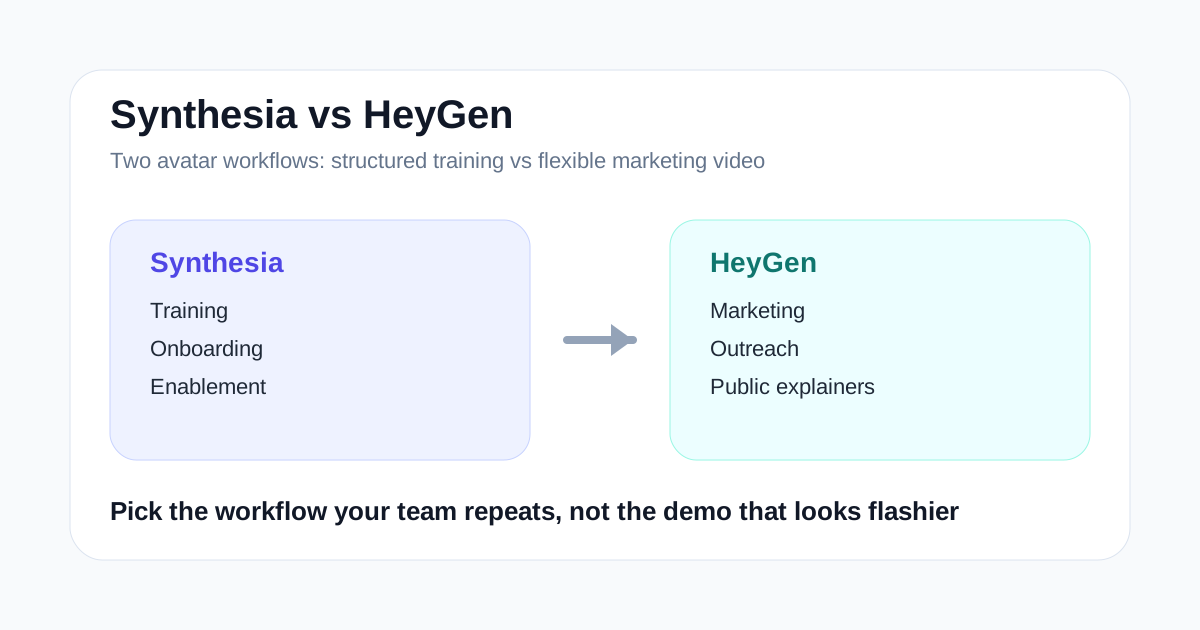
Synthesia and HeyGen are often treated like interchangeable AI avatar tools, but that is not the most useful way to compare them.
Yes, both can generate presenter-led videos without a traditional filming workflow. Both are relevant for product explainers, internal communication, and multilingual video production. Both appeal to teams that want to ship videos faster.
But the real buying decision usually comes down to workflow.
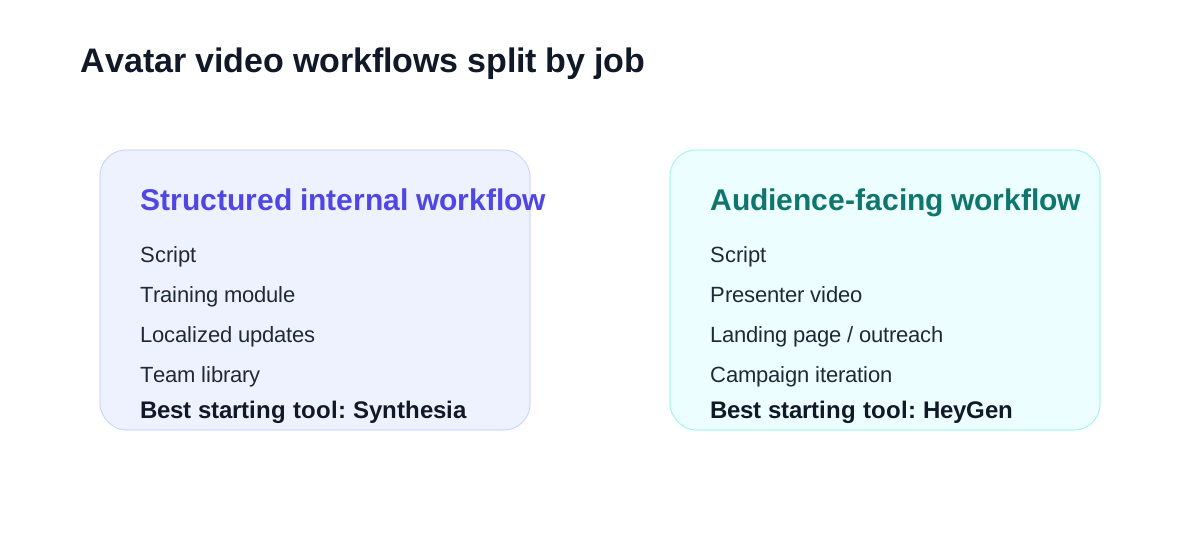
Synthesia tends to make more sense when the video job is operational, structured, and repeatable. Think onboarding, training, internal documentation, customer education, and enablement content that needs consistency more than personality.
HeyGen tends to make more sense when the video job is closer to marketing, promotion, outreach, landing-page explainers, or public-facing presenter content where polish and flexibility matter more than standardized training delivery.
If you compare them at that level, the decision becomes much easier.
Short Answer
Choose Synthesia first if you need:
- employee training and onboarding
- internal communications
- customer education libraries
- repeatable enablement videos
- multilingual business content at scale
- a structured script-first workflow
Choose HeyGen first if you need:
- marketing explainers
- sales or outreach videos
- landing-page video assets
- social-facing presenter content
- avatar videos that feel less like internal training
- a more creator-friendly public-facing workflow
If your team publishes standardized information repeatedly, Synthesia usually fits better. If your team wants avatar video for marketing and audience-facing communication, HeyGen is often the easier choice.
Core Difference
The simplest way to understand this comparison is:
- Synthesia is easier to justify as a business video system
- HeyGen is easier to justify as a flexible marketing avatar tool
That does not mean Synthesia cannot be used for marketing, or that HeyGen cannot be used for training. It means their strongest use cases tend to cluster in different parts of the workflow.
Many buyers waste time comparing avatar quality in isolation. That matters, but it is not the main decision. The main decision is whether your team needs:
- scalable operational video
- or faster presenter-style communication for external audiences
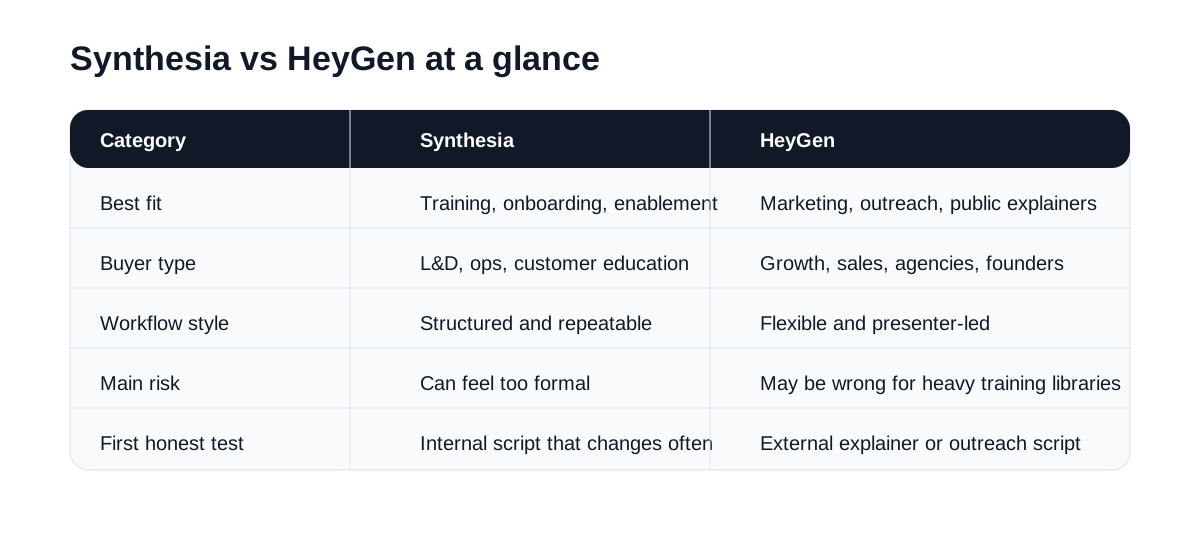
Synthesia vs HeyGen at a Glance
| Category | Synthesia | HeyGen |
|---|---|---|
| Best fit | Training, onboarding, customer education, enablement | Marketing, outreach, public-facing explainers, avatar-led promotion |
| Buyer type | L&D, operations, customer success, product marketing | Growth, sales, creator-marketing, agencies, public-facing teams |
| Workflow style | Structured and repeatable | Flexible and presentation-oriented |
| Strongest advantage | Scalable business communication | Faster audience-facing presenter content |
| Weakest point | Can feel too formal for creator-style content | Can be the wrong first choice for heavy training libraries |
When Synthesia Wins
Synthesia is stronger when the video output behaves like documentation.
That usually means:
- the script changes often
- the message needs to stay consistent
- multiple teams need access to the same content
- updates must be quick and controlled
- localization matters
- filming people every time is too slow
Examples include:
- onboarding videos for new hires
- feature walkthroughs for customers
- compliance or process updates
- support tutorials
- internal change-management communication
- sales enablement modules
In these environments, the best tool is not the one that feels the most creative. It is the one that reduces production friction every time the script changes.
When HeyGen Wins
HeyGen is stronger when the video output behaves more like communication than documentation.
That usually means:
- the video is tied to marketing campaigns
- the audience is external
- the content needs more style or presentational flexibility
- the team wants avatar-led content without making it feel like corporate training
- the workflow sits closer to sales, growth, or demand generation
Examples include:
- landing-page explainers
- sales prospecting videos
- multilingual marketing intros
- product teasers
- spokesperson-style social content
- agency client deliverables
For teams that want avatar videos but do not want the content to feel overly operational, HeyGen is often the cleaner first test.
Where Both Tools Can Work
There is real overlap.
Both tools can be relevant for:
- SaaS product explainers
- multilingual communication
- internal announcements
- sales training
- customer onboarding
- localized message variants
That is why the page should not promise a universal winner. In practice, the better tool depends on which department owns the video workflow and what standard the output needs to hit.
If the content owner is operations or learning, Synthesia often rises. If the content owner is growth or marketing, HeyGen often rises.
Common Buying Mistake
The most common mistake is buying based on the demo instead of the ongoing workflow.
A polished demo does not tell you:
- how quickly scripts can be revised
- whether non-video staff can manage updates
- whether the output feels credible in your channel
- how easy localization really is
- whether the team will keep using the system after the first month
Teams should test both tools against a real asset, not a generic sample script.
Suggested Test Workflow
Run a fair test with two different video jobs:
- Take one training, onboarding, or customer education script and build it in Synthesia.
- Take one public-facing explainer, outreach, or marketing script and build it in HeyGen.
- Review both outputs with the actual team that will publish or own them.
- Compare speed, acceptance, revision effort, and final usability.
- Decide whether one tool can cover both jobs, or whether the use cases should stay separate.
This will produce a much better decision than trying to rank them by screenshots or feature lists.
Which Teams Should Choose Synthesia
Synthesia is easier to justify for:
- learning and development teams
- HR and onboarding leads
- customer success organizations
- operations-heavy SaaS teams
- product education teams
- agencies building structured client training assets
These teams usually care about:
- repeatability
- script control
- clean update cycles
- predictable delivery
- multilingual scaling
Which Teams Should Choose HeyGen
HeyGen is easier to justify for:
- growth teams
- product marketers
- outbound sales teams
- agencies making avatar-led client content
- founders testing spokesperson-style messaging
- teams publishing customer-facing presenter videos
These teams usually care about:
- presentational impact
- landing-page or promo utility
- faster campaign production
- public-facing polish
- avatar-led communication that feels less formal
Final Recommendation
Synthesia is the better first choice when your main problem is structured business communication at scale.
HeyGen is the better first choice when your main problem is creating avatar-led marketing or audience-facing presenter videos faster.
If you are still unsure, do not force one test case. Use one internal script and one external script. The winner usually becomes obvious as soon as the real workflow shows up.
The wrong way to buy is asking which avatar tool looks coolest. The right way to buy is asking which one your team will still be using three months from now.
